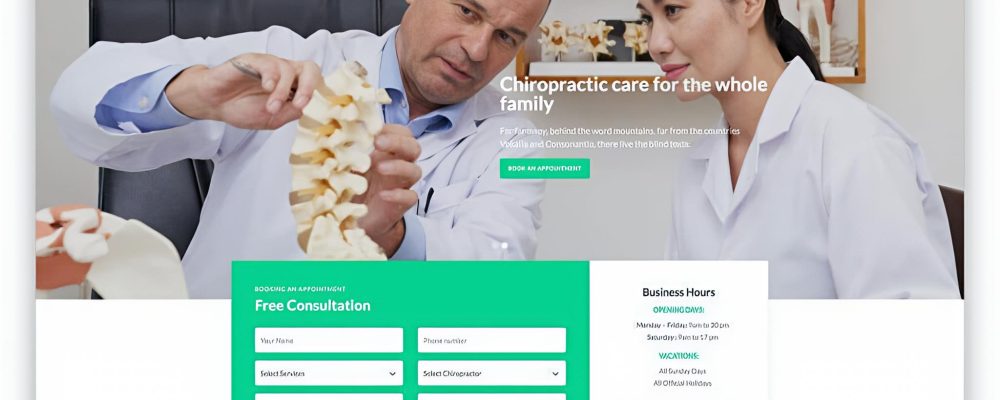
A medical practice’s website is often the first interaction a potential patient has with the clinic. Long before someone calls an office or schedules an appointment, they typically visit the provider’s website to learn about treatments, evaluate credibility, and determine whether the practice appears trustworthy.
In today’s healthcare environment, this initial interaction carries even more weight than it did just a few years ago. Patients are no longer simply looking for a phone number or office hours-they are actively evaluating whether a provider understands their condition, whether the clinic feels professional, and whether they feel confident moving forward with care. In many ways, the website has become an extension of the patient experience before the patient ever walks through the door.
Because of this, healthcare website design plays a much larger role than simply presenting information. A well-designed website guides visitors through a decision-making process, helping them understand their treatment options while building confidence in the provider. It creates a sense of clarity and reassurance, especially for patients who may already feel uncertain about their symptoms or treatment options.
Patients who encounter outdated or confusing websites frequently leave within seconds and continue searching for other providers. This behavior is especially common when websites feel difficult to navigate or fail to clearly explain services. On the other hand, clinics with clear, professional, and informative websites often experience significantly higher patient inquiry rates because they remove friction from the decision-making process.
At ModFXMedia, we help healthcare providers build websites designed not only to look professional but also to perform well in search engines and convert visitors into patients. Understanding the best practices of healthcare website design can help medical practices create digital experiences that support long-term growth while strengthening their overall marketing strategy.
Why Healthcare Website Design Is Critical for Patient Acquisition
Healthcare decision-making has become increasingly digital. Patients frequently rely on online information to evaluate providers, compare treatment options, and determine which clinic appears most trustworthy.
This behavior highlights a major shift in how patients choose providers. Instead of relying solely on referrals, many individuals now begin their journey by researching symptoms, reading about treatments, and comparing multiple clinics online before making a decision.
When potential patients visit a clinic’s website, they often evaluate several factors at once. They want to understand whether the practice offers the services they need, whether the providers appear experienced and credible, and whether scheduling an appointment will be easy. In many cases, these evaluations happen within seconds, which is why first impressions matter so much.
If a website quickly answers these questions and presents information clearly, patients are far more likely to schedule consultations. If the website is difficult to navigate or lacks helpful information, visitors may quickly move on to another provider. This creates a direct connection between website quality and patient acquisition.
These behavioral patterns make website design one of the most important components of modern healthcare marketing strategies. It is not simply a branding tool-it is a core part of how practices attract, educate, and convert patients online.
Clear Navigation and User-Friendly Layout
One of the most important principles of healthcare website design is clarity. Patients visiting a medical website are often searching for specific information, and they should be able to find it quickly without confusion.
Effective healthcare websites typically organize their navigation into clear categories such as services, conditions treated, provider information, patient resources, and contact or appointment pages. This structure allows visitors to immediately understand how the website is organized and where to go next.
In addition to helping users, clear navigation also reduces frustration. When patients cannot find what they are looking for within a few seconds, they are far more likely to leave the site entirely. This means even small improvements in navigation can have a significant impact on how long visitors stay on the website.
When visitors can easily locate the information they are looking for, they are more likely to stay on the website and explore additional pages. This increased engagement not only improves the user experience but also signals to search engines that the website provides valuable content.
Good navigation also helps search engines understand the structure of the website. Search engines evaluate how pages are connected through internal links, which helps determine how the site should appear in search results.
These structural improvements support the broader Medical SEO Services strategies used to improve search visibility. When a website is well-organized, it becomes easier for search engines to index pages and rank them appropriately.
Detailed Service Pages That Educate Patients
Healthcare websites should provide clear and detailed explanations of the treatments offered by the practice. Each major service should have its own page describing how the treatment works, the conditions it addresses, and the benefits patients may experience.
Expanding on this further, service pages should also answer the most common questions patients have before scheduling care. For example, patients may want to know how long the treatment takes, whether it is painful, what recovery looks like, and whether it is the right option for their condition.
For example, a regenerative medicine clinic might include individual pages covering platelet-rich plasma therapy, stem cell therapy, and joint pain injections. A chiropractic clinic may create pages for spinal adjustments, posture correction, and sports injury rehabilitation.
These pages serve two important purposes. First, they educate potential patients who are researching treatment options before scheduling an appointment. Second, they help search engines understand what services the practice provides.
Providing thorough explanations of treatments also helps demonstrate expertise, which is especially important for healthcare websites. Patients are more likely to trust providers who take the time to clearly explain how treatments work and what they can expect.
Educational Content That Demonstrates Expertise
Patients often search online for health information before deciding to seek professional care. Educational blog articles allow medical practices to answer common patient questions while demonstrating knowledge and expertise.
Expanding on this idea, educational content also helps build a relationship with potential patients before they ever make contact with the clinic. When a patient reads multiple helpful articles from the same provider, they begin to feel more comfortable and familiar with that practice.
Examples of helpful healthcare content include articles explaining common symptoms, treatment comparisons, recovery expectations, and preventive health tips. These types of articles meet patients where they are in their research journey.
For instance, a clinic specializing in regenerative medicine might publish articles discussing the causes of joint pain, the benefits of PRP therapy, or how regenerative treatments compare to surgery.
Google’s search algorithm prioritizes high-quality medical information that demonstrates expertise and credibility. These principles are part of Google’s E-E-A-T framework, which evaluates the experience, expertise, authoritativeness, and trustworthiness of content.
You can learn more about these guidelines here.
Educational content helps healthcare providers build trust while improving search rankings. Over time, this content becomes a long-term asset that continues attracting new patients.
Mobile Optimization for Patient Accessibility
Mobile browsing has become the dominant way patients access healthcare websites. Many people search for medical providers using smartphones, often when they are actively experiencing symptoms or researching treatment options.
Because of this, healthcare websites must be designed to function seamlessly on mobile devices.
Free Strategy Call
Ready to grow your practice?
No commitment. 30 minutes. A clear plan for your growth.
Mobile-friendly design typically includes responsive page layouts that adjust to different screen sizes, readable text that does not require zooming, and navigation menus that are easy to access on smaller screens.
Expanding further, mobile optimization also impacts how quickly patients can take action. If scheduling an appointment requires too many steps on a mobile device, patients may abandon the process altogether.
Google also uses mobile usability as a ranking factor, meaning websites that perform poorly on mobile devices may struggle to rank in search results.
Ensuring strong mobile performance helps both patient experience and search visibility.
Fast Website Performance and Page Speed
Website speed plays a critical role in both patient engagement and search engine rankings. If a website takes too long to load, visitors may leave before viewing any content.
Expanding on this, even a delay of a few seconds can make a noticeable difference in how users interact with a website. Faster websites create a smoother experience and encourage visitors to stay longer.
Healthcare websites should therefore prioritize fast loading speeds by optimizing images, minimizing unnecessary scripts, and using reliable hosting infrastructure.
Improving page speed not only creates a better experience for visitors but also strengthens search performance as part of a broader medical SEO strategy.
Clear Calls to Action That Encourage Appointments
An effective healthcare website should guide visitors toward taking action. Many patients arrive on a website ready to schedule an appointment but may hesitate if the next step is unclear.
Clear calls to action help patients understand exactly what to do next.
Examples of effective calls to action include scheduling consultations, requesting appointments, contacting the clinic for more information, or booking free evaluations.
Expanding further, these calls to action should be placed strategically throughout the website so that patients always know how to proceed. This includes placing them on service pages, blog articles, and even within navigation menus.
These prompts should appear strategically throughout the website, particularly on service pages and near the end of educational articles.
Encouraging visitors to take action is a key component of improving Healthcare Marketing ROI, since conversion rates directly influence patient acquisition.
Building Patient Trust Through Design
Trust is one of the most important factors in healthcare decision-making. Patients are far more likely to choose providers who appear credible and professional.
Healthcare websites should include elements that help build trust, such as provider biographies, professional credentials, patient testimonials, and clear explanations of treatment processes.
Expanding on this, trust is often built through a combination of small details. Clean layouts, professional images, and clear messaging all contribute to how a patient perceives a practice.
Visual design also contributes to trust. Clean layouts, professional photography, and organized content create a sense of credibility and competence.
These details may seem small, but they often influence whether a visitor chooses to schedule an appointment or continue searching for another provider.
Security and Privacy Considerations
Healthcare websites must also prioritize patient privacy and data security. If a website collects patient information through contact forms or appointment requests, it should use secure technology to protect that data.
Secure websites typically use HTTPS encryption and include clear privacy policies explaining how patient information is handled.
Expanding further, security is not just about compliance-it is about patient confidence. Patients want to feel assured that their information is safe when they contact a provider online.
These safeguards help protect sensitive information while maintaining compliance with healthcare regulations.
[Our guide on Healthcare Marketing Compliance](/healthcare-marketing-compliance-hipaa-rules-and-advertising-guidelines-for-medical-practices/) explains the regulatory considerations that healthcare websites should follow.
How ModFXMedia Builds High-Performing Healthcare Websites
At ModFXMedia, we design healthcare websites with both patients and search engines in mind. Our goal is to create websites that educate visitors, build trust, and convert potential patients into scheduled appointments.
Our medical website design systems focus on strong page structure, clear service explanations, optimized content, mobile-friendly design, and technical performance improvements.
Expanding on this, we approach website design as part of a larger marketing system. Each website is built to support SEO, advertising, and patient conversion strategies.
These elements work together to support long-term marketing strategies, including SEO, paid advertising, and content marketing.
Practices evaluating marketing partners can also review our guide on How to Choose a Healthcare Marketing Agency to better understand what to look for when selecting a team to support their digital growth.
Ready to Improve Your Healthcare Website?
If your website is outdated, difficult to navigate, or not generating patient inquiries, improving your website design could significantly impact your practice’s growth.
A well-designed healthcare website helps attract visitors, educate patients, and guide them toward scheduling consultations.
At ModFXMedia, we help medical practices build high-performance websites designed to support long-term marketing success.
If you would like to see how a modern healthcare website could help your clinic grow, click here to book a free strategy call with ModFXMedia.
Related Healthcare Website Resources
Justin Ingram
Healthcare Marketing Expert · ModFXMedia
Justin and the ModFXMedia team help medical practices across the US build patient acquisition systems that generate consistent, measurable growth.